
Andrew Huberman
March 9, 2026 · 14 min read
Avoiding, Treating & Curing Cancer With the Immune System | Dr. Alex Marson
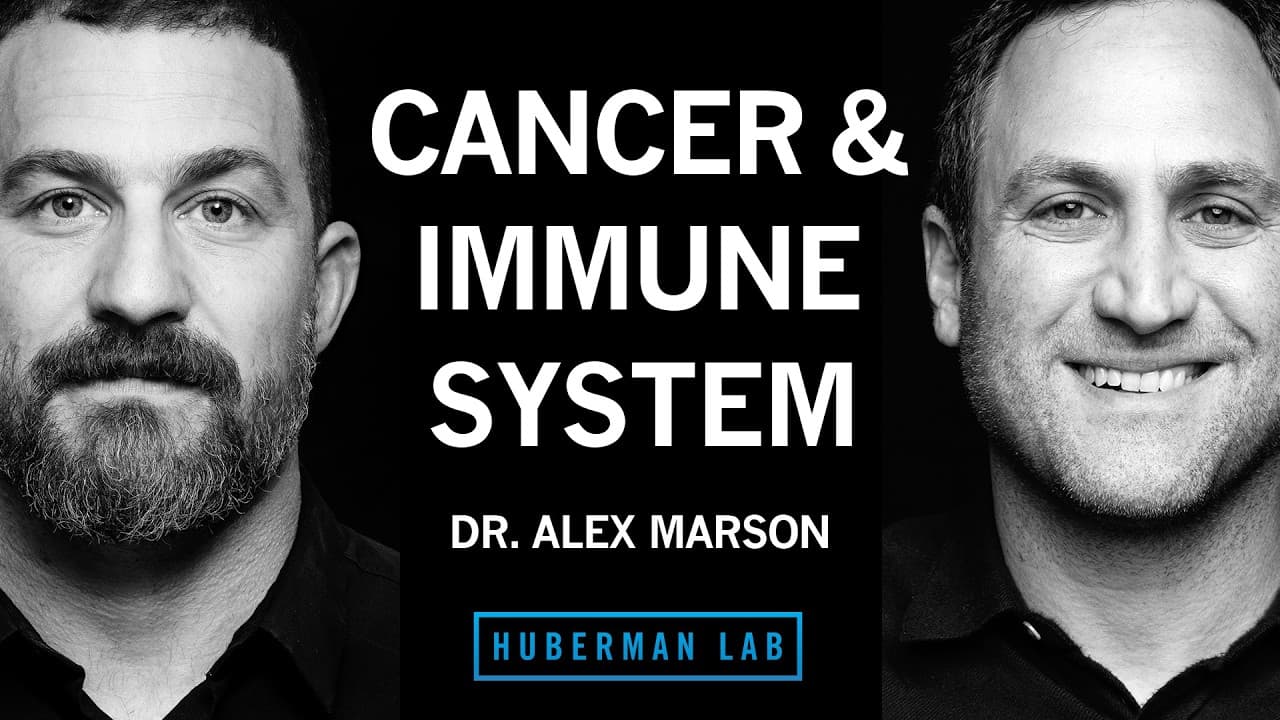
AI SummaryPowered by Sooma AI
Key Takeaways
- 1Understanding the Immune System
- 2Factors Affecting Immune System Health
- 3Cancer: A Genetic Disease of Cell Regulation
- 4Revolutionary Cancer Treatments: Harnessing the Immune System
- 5CAR T-Cell Therapy: Engineering Immune Cells
Understanding the Immune System
The immune system permeates almost every aspect of our health and disease. It's a sophisticated network designed primarily to protect us against infections from viruses, bacteria, fungi, and other foreign invaders. At its core, the immune system's fundamental job is to distinguish between "us" and "not us" - recognizing and eliminating threats while leaving healthy tissue intact.The immune system operates through two main branches: the innate and adaptive immune systems. The innate immune system serves as the first alarm system, consisting of cells like dendritic cells and macrophages that patrol the body looking for general patterns of damage or foreign material. When these cells detect something that shouldn't be there, they trigger an inflammatory response and recruit the second arm of immunity.The adaptive immune system provides more sophisticated, targeted responses through specialized white blood cells called lymphocytes, primarily B cells and T cells. T cells play a central coordinating role in immune responses. What makes T cells remarkable is that each individual T cell generates its own unique receptor through a largely random DNA recombination process. This creates an incredible diversity of sensors, with each T cell capable of recognizing different potential threats.The thymus organ plays a crucial role in T cell education. T cells undergo both positive and negative selection in the thymus - they must demonstrate they have functional receptors (positive selection) while also proving they don't react to the body's own tissues (negative selection). This process helps ensure that mature T cells can recognize foreign threats without attacking healthy tissue.B cells complement T cells by producing antibodies. Like T cells, B cells generate diverse receptors through random recombination, but their primary function is to produce antibodies that can be released into the bloodstream to neutralize specific threats after exposure.
Read the Full Summary
Sign up for free to unlock the complete AI-powered summary — plus get automated summaries for your favorite YouTube channels delivered to your inbox.
Sign Up FreeNo credit card required · Free plan available
Get summaries like this automatically
Subscribe to Andrew Huberman and other channels — we'll summarize every new video and send it to your inbox.




